Ingredients
Equipment
Method
- Heat the oven to 400 F. Rub the cut faces of the squash halves with 1 tbsp of the butter and season with 1 tsp salt. Lay them cut side down on a rimmed sheet pan and roast 45 to 55 minutes, until a knife slides through the thickest part with no resistance and the edges have caramelized.
- Scoop the flesh away from the skins into a food processor and blend smooth, or mash hard by hand. Discard the skins.
- Melt the remaining 1 tbsp butter in a large skillet over medium heat. Add the squash puree and cook 10 to 15 minutes, stirring often and scraping the bottom, until it thickens and a spoon dragged through the center leaves a clear trail that holds for a second. This step decides whether your lasagna is creamy or watery. Do not rush it.
- Pull the pan off the heat. Stir in the crushed amaretti, the chopped mostarda and its syrup, half the nutmeg, and 1/2 tsp salt. Taste. It should read sweet first, then savoury, with a faint mustard heat at the back. Set aside to cool.
- Make the bechamel. Melt 6 tbsp butter in a heavy saucepan over medium heat, whisk in the flour, and cook 2 minutes until it smells faintly of toast but takes no color. Pour in the warm milk in a slow stream, whisking constantly.
- Cook the sauce 6 to 8 minutes, whisking, until it coats the back of a spoon. Whisk in the remaining nutmeg and 1/2 tsp salt. Drop in the sage leaves, cover, and let them steep 10 minutes off the heat, then fish them out.
- If using dried lasagne sheets, boil them 2 minutes short of the package time in well-salted water, then spread them flat on a towel. Fresh sheets go in as they are.
- Lower the oven to 350 F. Spread a thin layer of bechamel across the bottom of a 9x13 inch baking dish. Lay down a sheet layer of pasta.
- Spread a third of the squash filling over the pasta, spoon over a quarter of the remaining bechamel, and scatter 1/2 cup Parmigiano. Repeat twice more, keeping the layers thin and even.
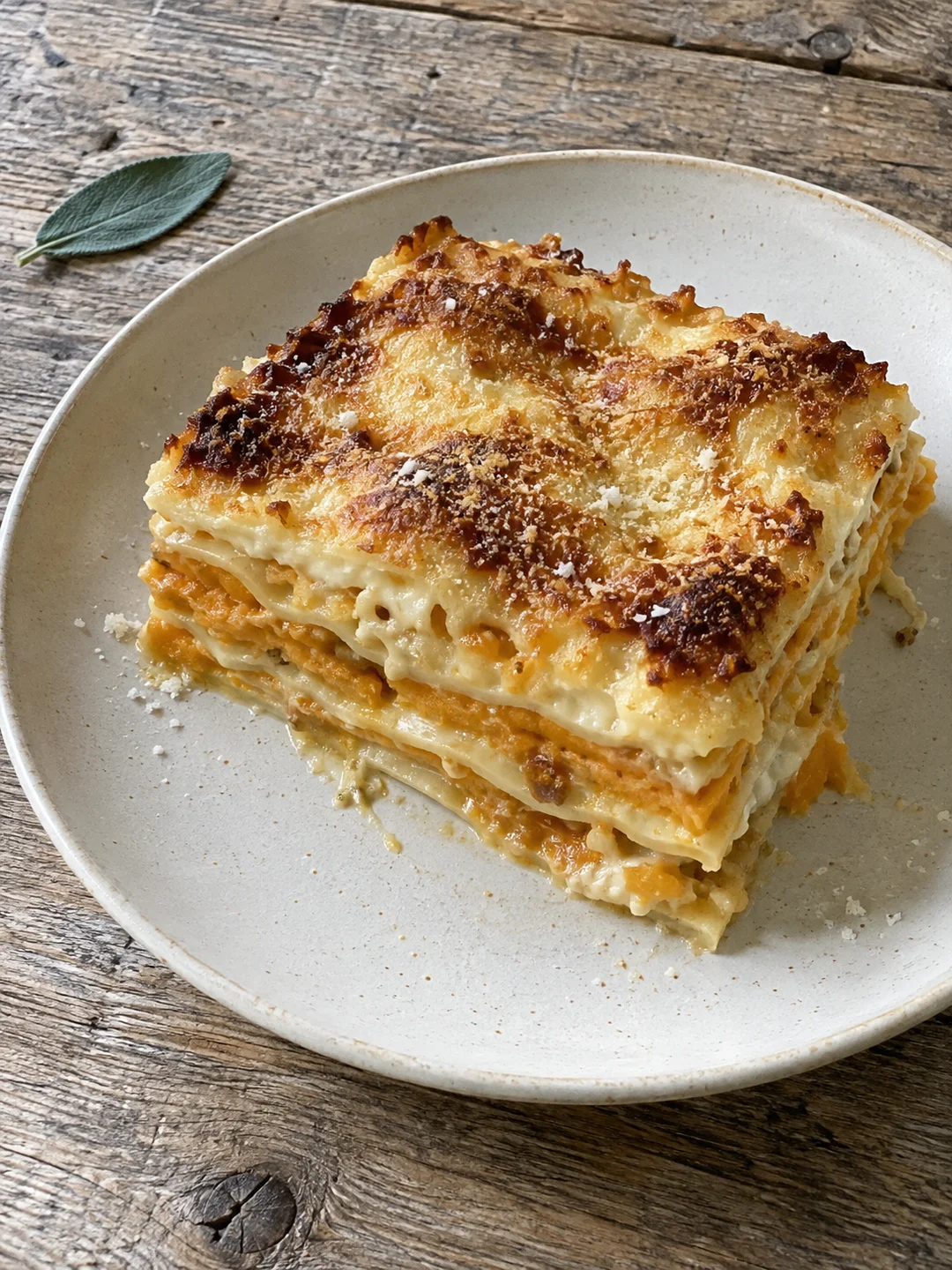
- Finish with a final layer of pasta, the last of the bechamel spread edge to edge, and the remaining 1 cup Parmigiano over the top.
- Bake 25 to 30 minutes, until the top is golden and lightly crusted and the sauce bubbles at the corners. If the surface is still pale, run it under the broiler for 90 seconds.
- Rest the lasagna 20 minutes before cutting. It needs that time to set, and the sweet-savoury flavour comes through more clearly just below piping hot.