Ingredients
Equipment
Method
- Grind the walnuts in a food processor in short pulses until they look like damp, fine sand. Stop before they turn into paste. You want an even, sandy texture with no big chunks.
- Set a heavy Dutch oven over medium-low heat, add the ground walnuts dry, and toast them slowly for 8 to 10 minutes, stirring almost constantly with a wooden spoon. They will deepen from pale beige to a warm golden brown and their oil will start to bead at the surface. Do not let them scorch.
- Pour 4 cups of water or stock into the walnuts, stir well to break up any clumps, bring to a gentle simmer, then lower the heat, cover, and let it cook quietly while you handle the rest.
- In a large skillet, warm 2 tbsp of oil over medium heat. Add the sliced onions with a pinch of salt and cook for 12 to 15 minutes, stirring often, until soft and lightly golden. Add the turmeric and stir for 30 seconds until fragrant.
- Push the onions to one side, add the remaining 1 tbsp oil, and lay the chicken pieces (or duck) skin side down in the skillet. Brown for 4 to 5 minutes per side until the skin is deep golden. Season with 1 tsp salt and the black pepper.
- Transfer the onions and browned poultry to the walnut pot. Add the pomegranate molasses and 1 tbsp sugar. Stir gently, making sure the poultry is mostly submerged. Return to a bare simmer.
- Partially cover the pot and cook over the lowest possible heat for 2 to 2.5 hours (up to 3 hours for duck), stirring every 20 to 30 minutes so the walnuts do not stick or scorch on the bottom. The sauce will slowly turn from muddy tan to a deep chocolate brown and a slick of walnut oil will rise to the surface.
- After the first hour, taste the sauce. If it is sharply sour, add sugar 1 tsp at a time. If it is flat or too sweet, add another spoonful of pomegranate molasses. The finished flavor should read sour first, then rounded by a whisper of sweetness.
- Stir in the bloomed saffron along with its yellow soaking liquid in the last 15 minutes of cooking. Adjust salt to taste.
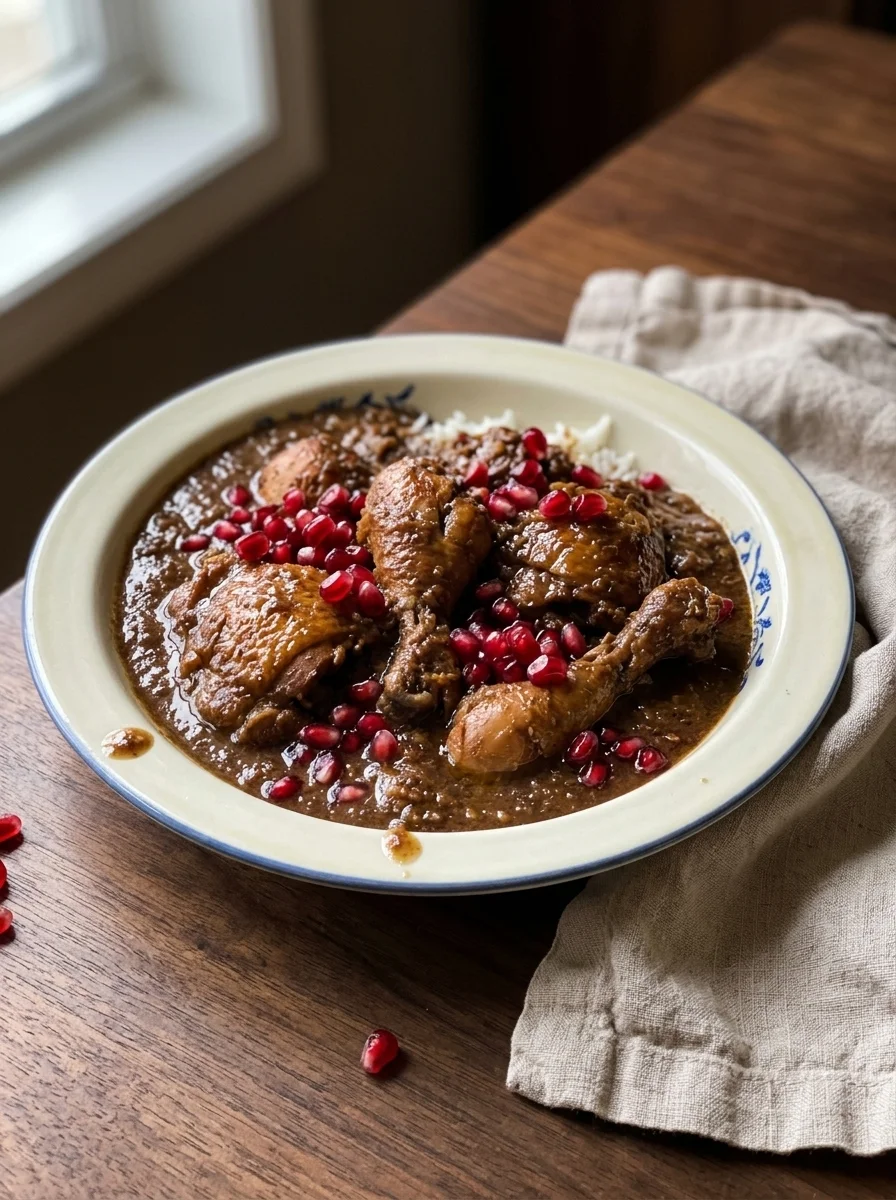
- The stew is ready when the sauce is thick enough to coat the back of a spoon, glossy with visible walnut oil, and the poultry is falling from the bone. Let it rest off the heat for 10 minutes, then scatter fresh pomegranate arils over the top just before serving.