
The first Christmas cracker toffee I ever ate came out of a toaster oven wedged into the galley of a whitefish boat, in December, tied up at the city dock in Bayfield, Wisconsin. I had come for the harbour market. I stayed on that boat for about two hours.
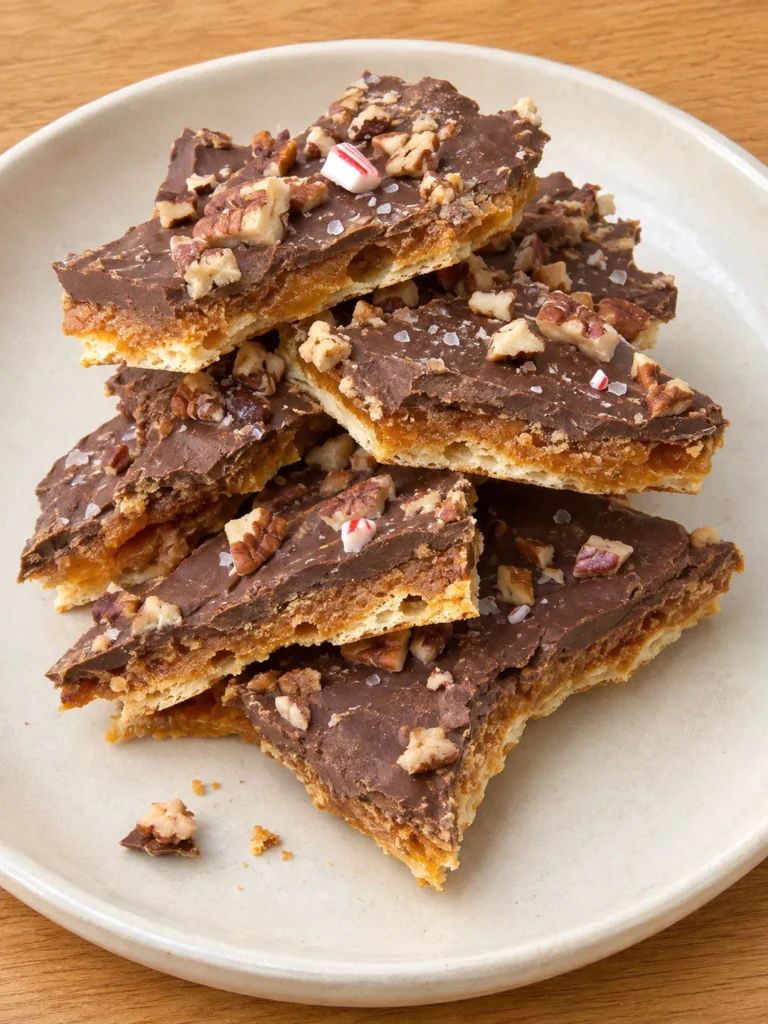
Still the best candy anyone has handed me in a paper towel.
A December Dock in Bayfield, Wisconsin
The market was loud in the way small-town winter markets are loud. A high school brass band working through carols slightly flat, kettle corn popping, steam coming off the cocoa urn, and behind all of it the smell of a fish boil going in a cut-down barrel.
I was queueing for cocoa when a man in orange bibs asked if I was the one who had been photographing his nets. That was Dale. He fishes whitefish and lake trout out of the Apostle Islands and he had his boat open to the market crowd, mostly to sell smoked fish out of a cooler.
He waved me up onto the deck because his hands were full, then disappeared into the galley and came back with a tin of brown shards covered in chocolate. I ate three. He saw my face and said he would make another tray right then, since the dock power was already running his toaster oven.
So I watched a fisherman make candy in a space the size of a closet. Two-burner stove, a battered saucepan, a wooden spoon worn flat along one side from years of stirring. He set a timer on his phone for four minutes and told me the only rule was not cheating on the boil.
What Christmas Cracker Toffee Actually Is
I want to clear up the name, because it confused me too. This has nothing to do with the British paper party cracker you pull at the table. The cracker in Christmas cracker toffee is a saltine, forty of them, laid edge to edge like floor tile.
It is also not English toffee or bonfire toffee. No thermometer, no hard-crack stage, no sugar-work anxiety. Just a timed rolling boil of butter and brown sugar poured over crackers, then a short bake that turns a soft caramel into something that snaps.
It is mid-century American pantry candy, and the Midwest is where it comes from. Versions called simply saltine toffee, with nuts and no chocolate at all, show up in Midwestern community and church cookbooks by the 1950s, then travel through the 1970s and 1980s on handwritten recipe cards and fundraiser collections because it cost almost nothing to make in volume.
The chocolate layer became standard once bagged chips were in every cupboard, which is what turned the slab into a snappable bark. The nickname Christmas crack is recent, more like 2000s internet, and it refers both to the noise the cold sheet makes when you break it and to how hard it is to stop eating. Close cousins include cracker roca and the matzo crunch that shows up on Passover tables in spring.
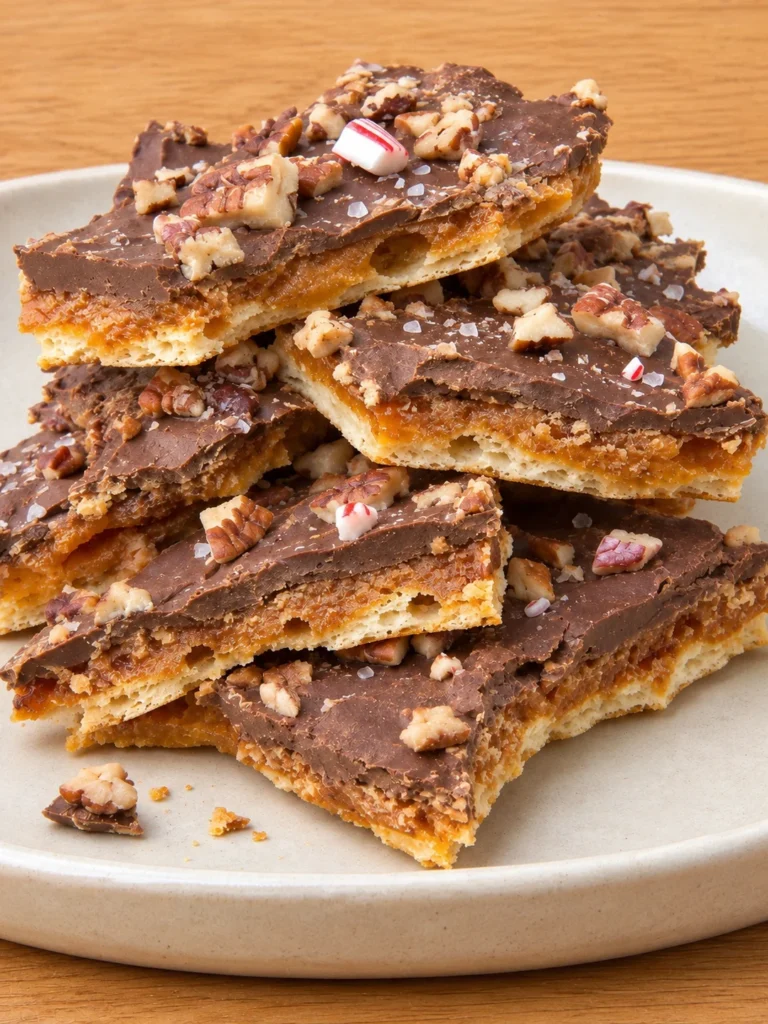
What I Used
- 40 saltine crackers, one sleeve, regular salted, nothing low-sodium
- 1 cup salted butter, two sticks, cut into pieces so it melts evenly
- 1 cup packed light brown sugar
- 1 teaspoon vanilla extract, optional, stirred in off the heat
- 2 cups semisweet chocolate chips, 12 ounces, milk chocolate works too
- 3/4 cup pecans, chopped, optional but I always do it
- 1 teaspoon flaky sea salt for finishing
- 1/4 cup crushed candy canes or holiday sprinkles, if you want it to look like December
- Aluminium foil, enough to come up and over all four sides of the pan
The Four Minutes, and the Six After
This is where the recipe punishes impatience, and it punishes it twice. The butter and brown sugar go into a heavy saucepan over medium heat and you stir constantly, no exceptions, until it comes to a full rolling boil. Then you boil it for a timed four minutes while still stirring.
Not three. Not until it looks right. Four, on a timer, the way Dale did it.
Crank the heat to hurry it along, or stop stirring to check your phone, and the butterfat separates and pools in a greasy slick on top. That is not a bad recipe. That is heat and inattention, and I learned it the hard way the second time I made this.
The pour is fast work. The toffee starts setting the moment it leaves the pan, so I spread it right out to the cracker edges with an offset spatula, the one with the slightly bent tip I keep meaning to replace and never do.
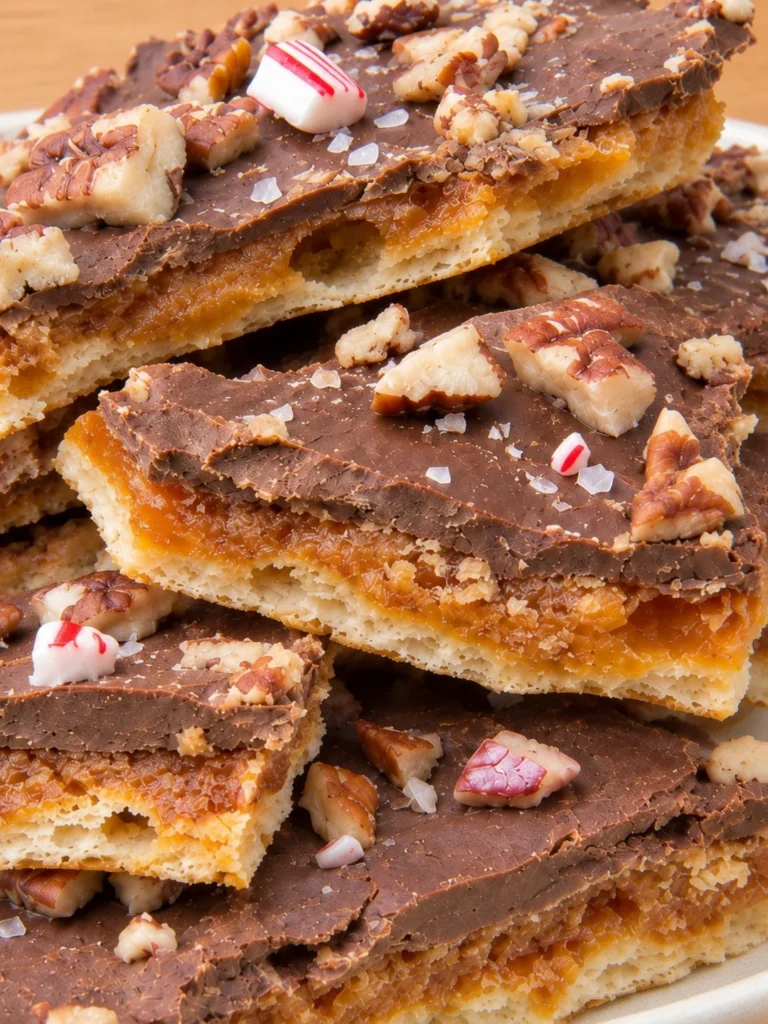
Then the bake, six to eight minutes at 375, until the whole surface is bubbling steadily and gone amber. My first attempt I skipped this step entirely because the toffee already looked done. It stayed pale, soaked into the crackers and never snapped. Chewy, greasy, sad. The oven is what makes it candy.
After that comes the slowest part. Chips scattered over the hot toffee, two or three minutes until they slump and go glossy, spread smooth, toppings on while the chocolate is still wet so they actually stick. Thirty minutes at room temperature, then at least two hours in the fridge, and overnight is better.
Making It in My Own Kitchen Instead
I make this on a Sunday morning before the street outside wakes up, which is the closest thing I have to the quiet of that harbour. Winter rain on the kitchen window helps. My half-sheet pan has a dark scorch mark in one corner from something unrelated and I always line it up facing away from me, which is a superstition, not a technique.
What is missing at home is obvious. No brass band, no fish boil smoke, no cold air coming off a lake the colour of slate. I get brown sugar and pecans at the Wednesday farmers’ market and the candy comes out exactly the same, and still it is not the same.
I prefer it cold, eaten standing at the fridge with the door open. Which is a strange thing to say about a candy I first ate steaming hot on a boat deck in December, but there it is.
Swaps, and Two Things Not Worth Trying
Pecans are my default, though Dale used walnuts because that was what his wife had in the cupboard. Crushed candy canes make it read as holiday instantly, and flaky sea salt on top doubles down on the saltine. Skip all three and it still works.
Two warnings. Do not use 70 percent dark chocolate, it sets too brittle and shatters off the toffee in sheets, which I know because I tried it with a 72 percent bar I was proud of owning. And never unsalted or low-sodium crackers, since the salt baked into the saltine is the entire reason you keep going back for another shard.
Break the finished slab by hand into rough pieces. Cutting a chilled slab cracks it unpredictably anyway, so you may as well let it break where it wants to.
It keeps two weeks in an airtight container in the fridge and three months frozen with parchment between the layers, which is why half of mine goes into tins for other people. Dale told me his wife makes eight trays every December and that none of them ever stay in the house. I send him a photo of my first tray every year, and he always replies with the same two words. Four minutes.
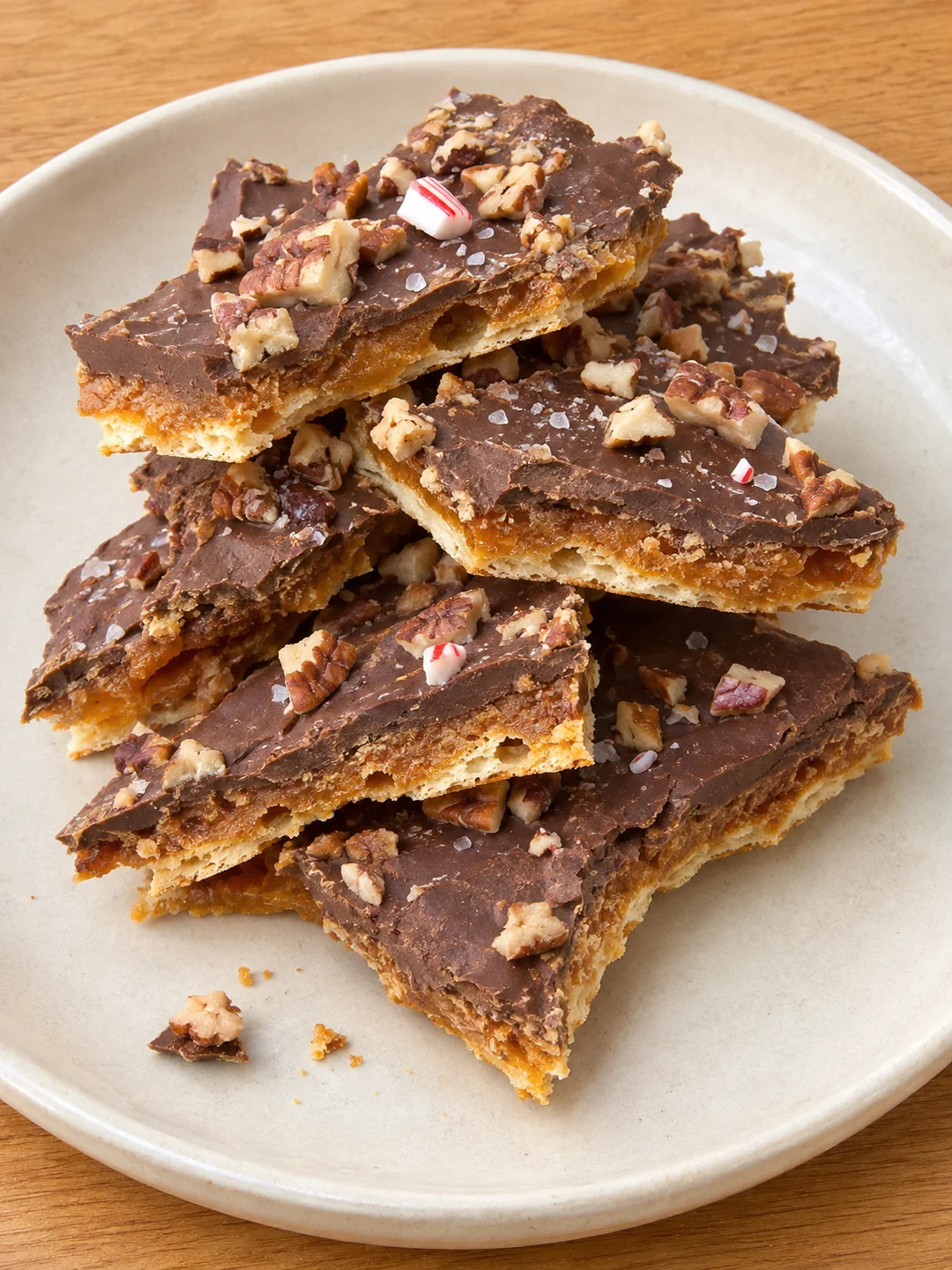
Christmas Cracker Toffee
Ingredients
Equipment
Method
- Preheat the oven to 375 F. Line a rimmed half-sheet pan with aluminum foil, bringing the foil up and over all four sides so the toffee cannot run underneath.
- Lay the saltine crackers on the foil in a single tight layer, salted side up, edge to edge with no gaps. Break a few crackers to fill the edges if needed. The crackers are your pan floor, so leave no holes for toffee to leak through.
- Put the butter and brown sugar in a heavy saucepan over medium heat. Stir constantly as the butter melts and the sugar dissolves.
- Bring the mixture to a full rolling boil, still stirring constantly, and boil for a timed 4 minutes. It will thicken, smooth out and darken a shade. Do not raise the heat and do not stop stirring, or the butterfat will separate and pool. Stir in the vanilla off the heat if using.
- Pour the hot toffee evenly over the crackers and spread it quickly with an offset spatula, right out to the edges. Work fast, it begins to set as it cools.
- Bake for 6 to 8 minutes, until the entire surface is bubbling steadily and amber. This bake is what sets the toffee into hard candy instead of a chewy, greasy layer. Watch it closely after minute 5 so the edges do not burn.
- Pull the pan from the oven and immediately scatter the chocolate chips evenly over the hot toffee. Let them sit 2 to 3 minutes until they slump and go glossy.
- Spread the softened chocolate into a smooth, even sheet with the offset spatula. Scatter the chopped pecans, flaky sea salt and crushed candy canes over the top while the chocolate is still wet so they stick.
- Cool at room temperature until the chocolate loses its shine, about 30 minutes, then refrigerate at least 2 hours or overnight until the slab is completely firm.
- Lift the slab off the foil in one piece and break it by hand into irregular shards. Keep the shards cold until you serve them.