
The first Dry-Brined Roast Turkey I ever ate came up a back staircase in North Beach, San Francisco, on a Tuesday in November. Rosaria carried it herself, on a sheet pan, with a dish towel laid over the top so it would not cool on the stairs.
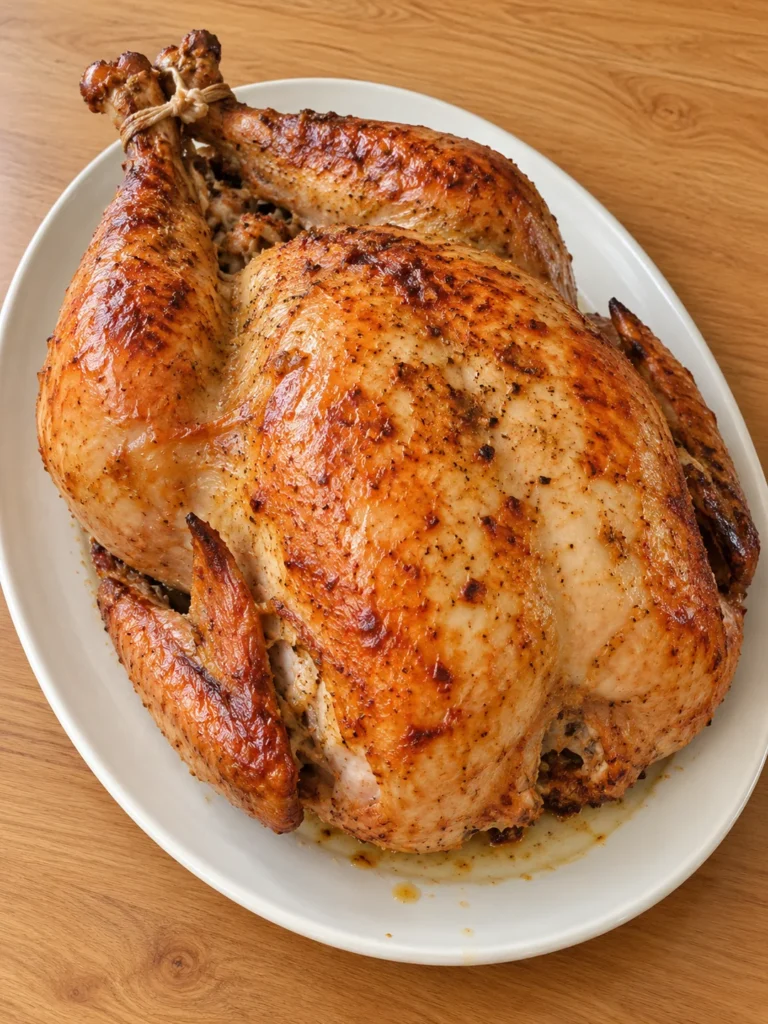
I had booked the spare room above the restaurant because it was cheaper than anything near Union Square and had a window that opened. The turkey was not part of the deal.
The Kitchen Above the Trattoria in North Beach
Rosaria Imbriano was eighty-one and lived one floor above the dining room where her grandson Dino ran dinner service. He cooked the restaurant version downstairs, carved to order with the pan gravy. She cooked the family version upstairs on the night the place was closed.
Her kitchen was yellow tile, one window onto a fire escape, and a wall calendar from a plumbing supply company that was two years out of date. She wore a grey cardigan with a safety pin where the third button should have been, and slippers with the backs flattened down. She let me help on the condition that I did exactly what she said.
I reached for the faucet to rinse the bird and she took my wrist. Not hard. Just enough to stop it.
Then she pushed my hand up under the breast skin to show me how far it goes before it tears, which is further than you think, and told me the salt belongs in there, against the meat, not sprinkled over the outside like a decoration. She salted it two days early, bagged it, and that was the whole trick. I had spent years assuming a good turkey required a bucket.
Those five days in San Francisco gave me a lot of things, but this is the one I still use every November.
Why Dry-Brined Roast Turkey Is Not Actually Dry
The name is misleading and I have made peace with it. The salt pulls moisture out of the meat, dissolves in that moisture, and the concentrated brine gets reabsorbed. The bird really is brined. It just happens inside the skin instead of in a cooler on your porch.
The method has a paper trail, which I like. Judy Rodgers pre-salted the poultry at Zuni Café in San Francisco a day or more before it went in the oven, famously for her roast chicken. In 2006, Russ Parsons, then food editor at the Los Angeles Times, got tired of spongy wet-brined holiday birds and scaled Rodgers’s salting up to a whole turkey. It won a blind taste test among the Food section staff.
He floated the idea back to Rodgers, she tried it, she approved, and he named the recipe the Judy Bird in her honor. Within about ten years it had pushed wet brining off the American holiday table almost entirely.
So when people call dry brining traditional, that is a stretch. It is a restaurant technique from one San Francisco chef that migrated into home kitchens through newspaper food sections in the mid-2000s. Twenty years old, roughly. Younger than most of the arguments people have about turkey.

What I Used
- A 14 lb whole turkey, heritage if the farm stand has one. Not kosher, not pre-brined, not self-basting, or you will be eating ham
- 3 1/2 tbsp coarse kosher salt, Diamond Crystal, which works out to about a tablespoon per 4 lb of bird
- 2 tsp coarsely ground black pepper
- 6 tbsp unsalted butter, soft enough to spread with your fingers
- 8 sprigs fresh thyme
- A small bunch of flat-leaf parsley
- 1 large onion, halved, skin left on
- 1 apple, cored and halved
- 1 1/2 cups dry white wine for the pan, or stock, or plain water
- Kitchen twine, foil, and an instant-read thermometer that you trust
Where Most Home Cooks Blow It
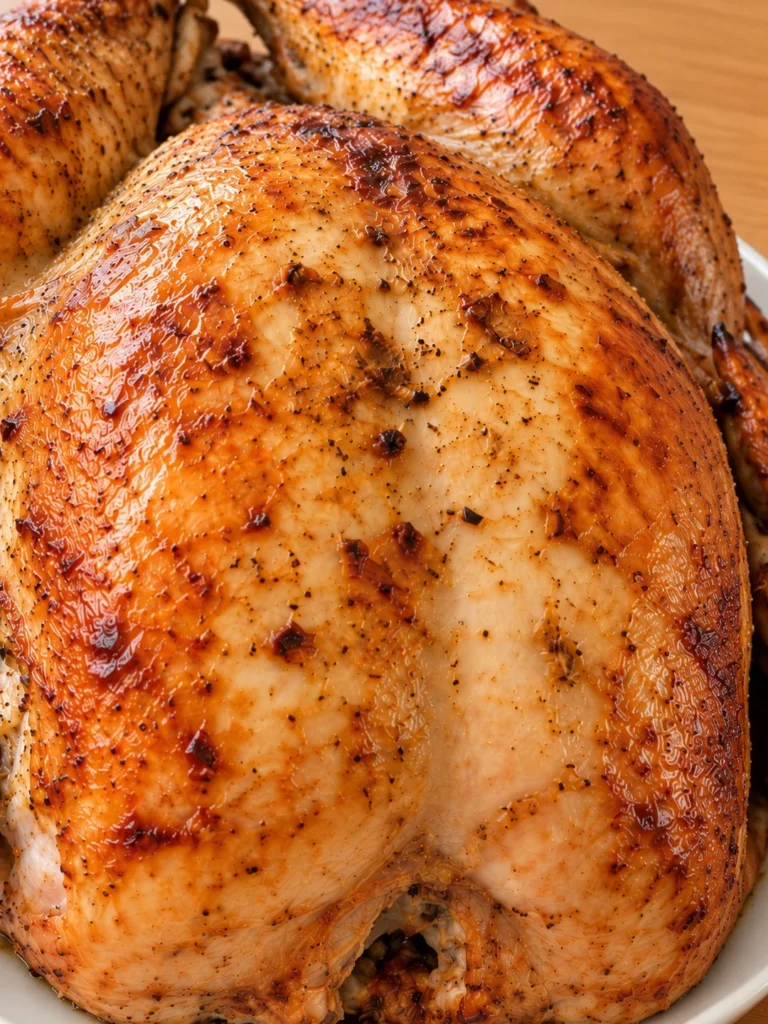
This is less a recipe than a scheduling problem with a bird attached. Three days. Two of them salted and bagged in the fridge, turned over once at the halfway mark, and then the last eight to twelve hours sitting uncovered on the rack so the skin dries out. That uncovered stint is not neglect. It is the entire reason the skin goes lacquered and crackly instead of pale and chewy, and every single person I know who covered the bird back up to be safe got soft skin for their trouble.
Salt is the other place it falls apart. The amounts here are Diamond Crystal. Morton kosher is denser, so cut it by about a quarter, and iodized table salt will ruin the whole thing in a way no gravy can fix. My first solo attempt, back in my own kitchen, I used Morton at Diamond Crystal volume and did not adjust. Edible. Barely. My neighbor was polite about it.
Then do not salt anything else. Not the butter, not the aromatics, not the pan liquid, not the gravy base. The meat is already seasoned to the bone and the drippings carry that seasoning with them, so taste the pan juices before you reach for anything.
No basting. Opening the oven drops the temperature and the butter you spread under the skin is already doing that job. No bread stuffing in the cavity either, because it slows the middle down and you end up with dry breast meat waiting on wet dressing. Aromatics only, dressing in its own dish.
Pull it at 160 to 165 F in the thickest part of the thigh, away from the bone, and rest it a full thirty minutes under loose foil. I always rest it exactly thirty. Except the year the gravy broke and it sat closer to fifty, which honestly carved beautifully, so take my precision with a grain of salt.
What I Change in My Own Kitchen
I buy the bird at the Sunday farmers’ market now, from the stand that will hold one for you if you ask the week before. Old travel agent habit. I book everything early.
The roasting pan is secondhand, bought for eleven dollars, both handles slightly bent from whatever life it had before me, and it goes straight onto two burners afterward for the gravy. Wine in the pan is what Rosaria used and what I prefer, but stock or water is fine and nobody at the table has ever been able to tell. The apple in the cavity I was skeptical about. It smells like November in a way the onion alone does not, so it stays.
Last year it rained the whole afternoon, the kitchen window fogged, and the radio was doing traffic reports for a city where nobody was driving anywhere. The skin came off the breast in one crisp sheet when I carved it.
Cold leftovers, standing at the counter, eaten with my fingers. Better than the plate it came off.
I send Rosaria a card every year around the fourth Thursday. She has never written back and I do not think she will, but she handed me a method I will use for the rest of my life in a kitchen the size of a parking space. That seems worth a stamp.
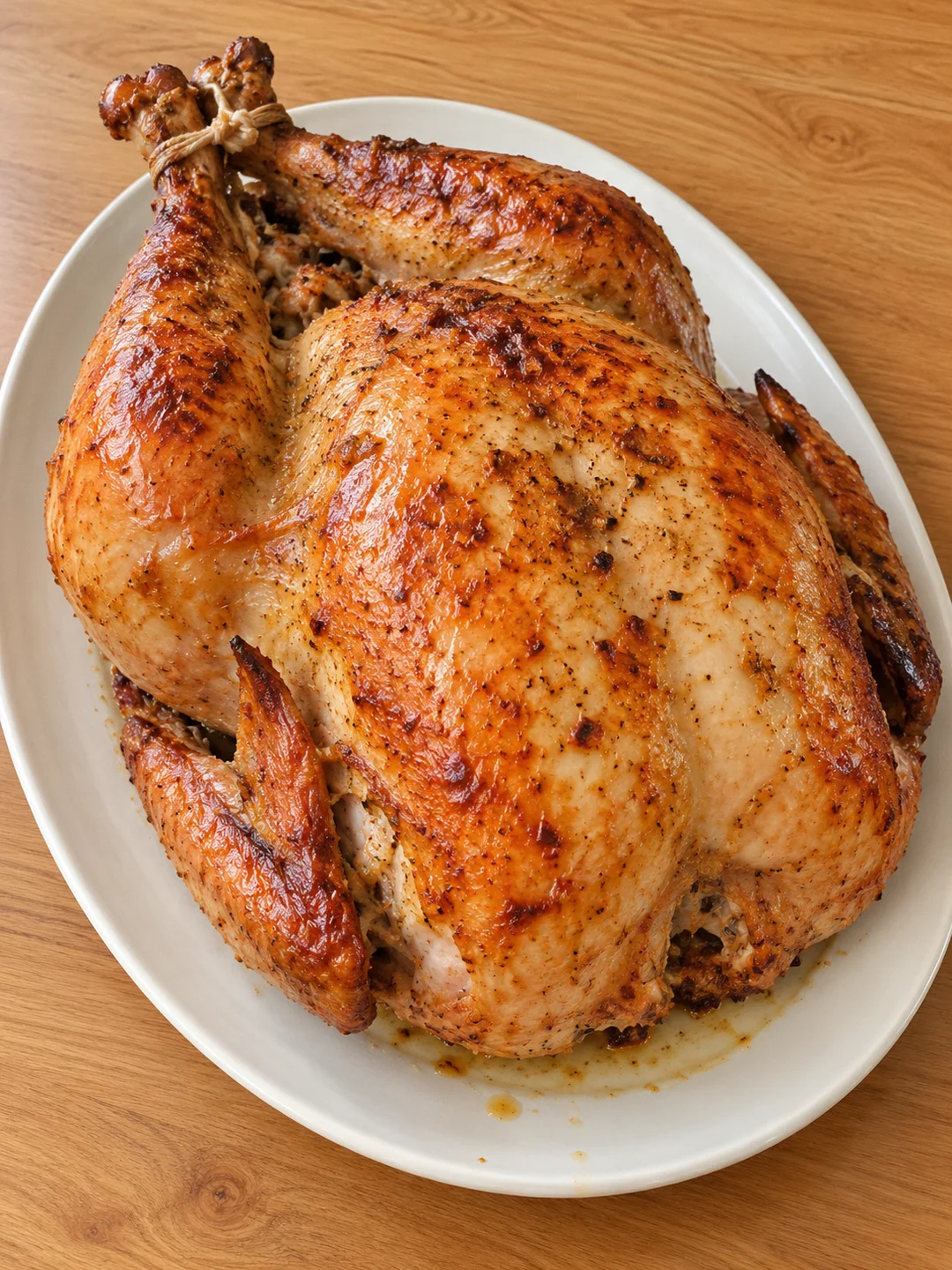
Dry-Brined Roast Turkey
Ingredients
Equipment
Method
- Three days before you want to eat, remove the neck and giblets from the turkey and reserve them in the refrigerator for stock or gravy. Pat the bird completely dry inside and out with paper towels. Do not rinse it.
- Slide your fingers between the skin and the meat over each breast half, then over each thigh, loosening the skin without tearing it. Work carefully from the neck end and the edge of the cavity.
- Measure the salt. Rub about half of it directly on the meat under the loosened breast and thigh skin, pressing it in with your fingers. Sprinkle about 1 teaspoon inside the body cavity and rub the rest over the outside of the bird, concentrating it on the thick parts of the breast and legs and using less on the wings.
- Seal the turkey in a large plastic bag, pressing out the air, or set it in a covered pan. Refrigerate for 2 days, turning the bird over after about 24 hours so the salt distributes evenly. Do not add any liquid.
- Eight to twelve hours before roasting, take the turkey out of the bag, pat it dry, and set it breast up on a rack in the roasting pan. Return it to the refrigerator completely uncovered so the skin dries out. It will look taut and slightly translucent when it is ready. This step is what gives you crisp skin.
- Pull the turkey out of the refrigerator 1 hour before roasting and let it stand at room temperature. Position a rack in the lower third of the oven and heat the oven to 450 F.
- Pat the bird dry once more and season it all over with the coarsely ground black pepper. Add no more salt. Stuff the cavity with the thyme sprigs, parsley, onion halves, and apple halves.
- Rub the softened butter onto the meat under the breast and thigh skin, spreading it in an even layer with your fingers from the outside. Smear any remaining butter over the outside of the skin.
- Truss the bird: tie the legs together at the ankles and tuck the wing tips behind the shoulders. Set it breast up on the rack in the roasting pan.
- Roast at 450 F for 30 minutes, until the skin has begun to brown and tighten.
- Reduce the oven to 350 F. Lay a loose sheet of foil over the breast and shield the wing tips, and pour the wine into the bottom of the pan. Do not salt the pan liquid.
- Continue roasting about 2 hours, adding a splash of water to the pan if it threatens to dry out. Do not baste and keep the oven door closed as much as possible. Start checking at the 1 hour 30 minute mark if your bird is on the smaller side.
- The turkey is done when an instant-read thermometer pushed into the thickest part of the thigh, away from the bone, reads 160 to 165 F. Remove the foil for the last 15 minutes if the skin needs more color.
- Transfer the turkey to a carving board, tent it loosely with foil, and rest at least 30 minutes. The temperature will climb a few degrees and the juices will settle.
- While the bird rests, set the roasting pan over medium heat, scrape up the browned bits, and simmer the pan juices down for gravy. Taste before adding anything: the drippings are already seasoned from the cure.
- Discard the cavity aromatics, carve the turkey, and serve with the pan gravy and the juices from the board.